Why it's built this way
Headline
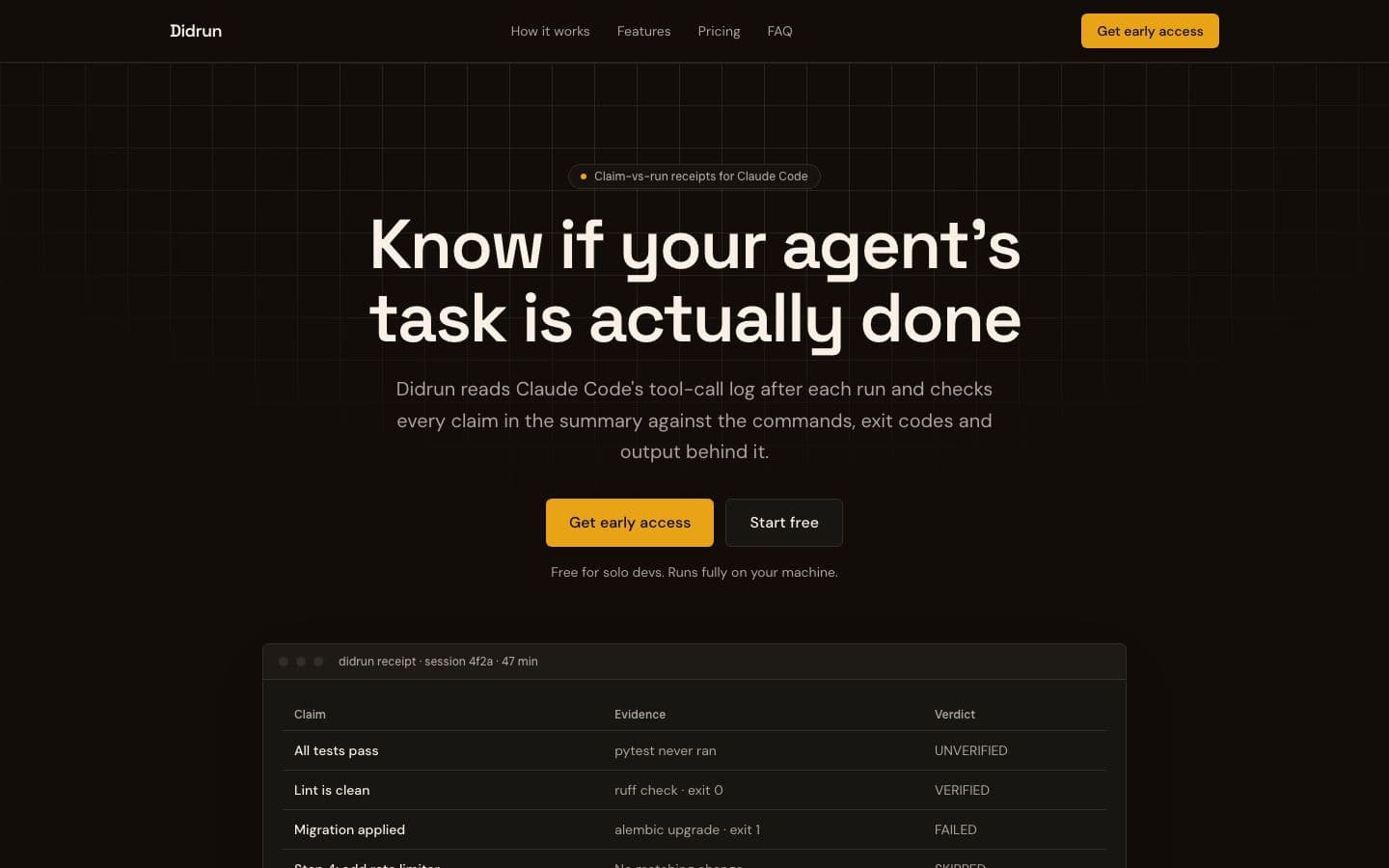
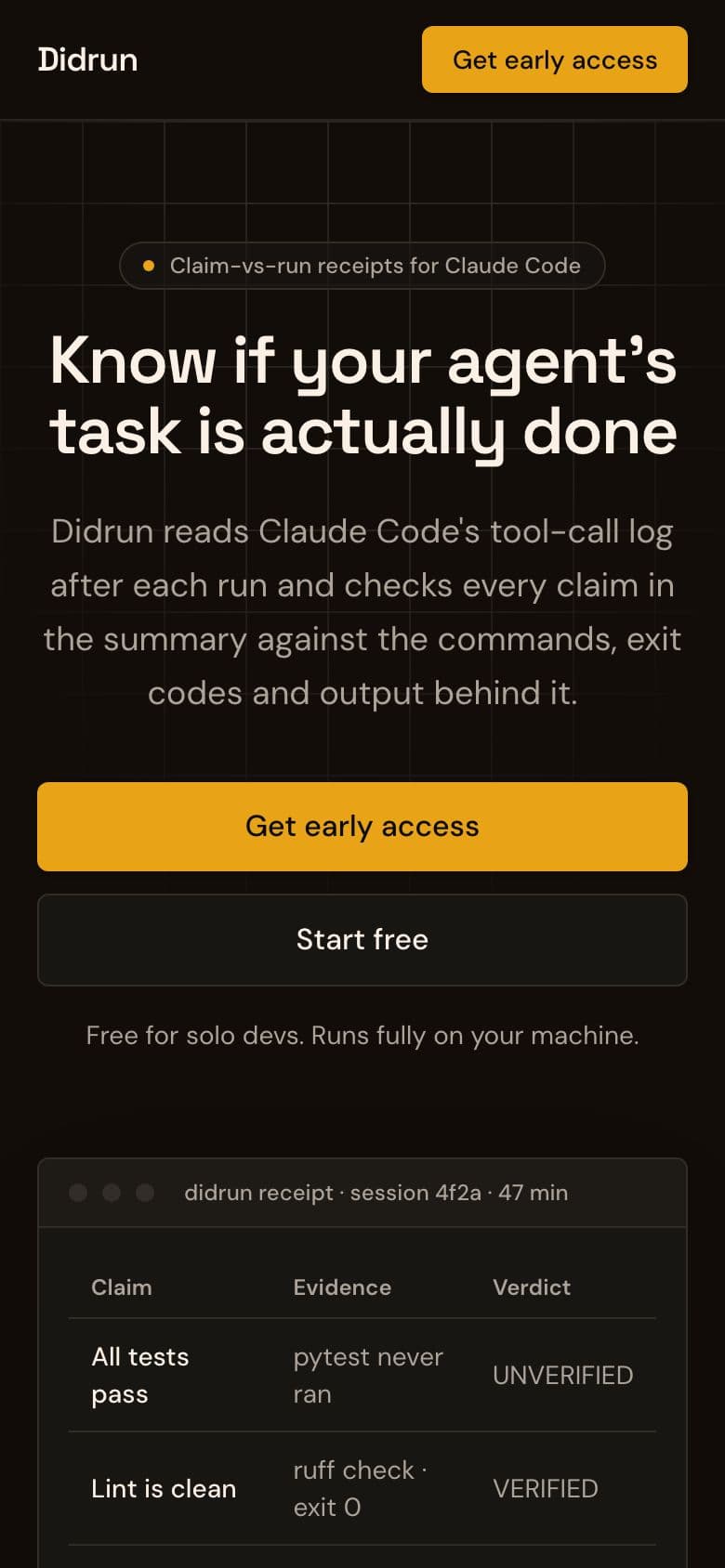
Know if your agent's task is actually done
People said agents report a task as done when it is not. The headline names that exact doubt in plain words, and 'actually done' points at the gap between the claim and the work. A developer who has been burned by a confident summary sees their own problem first, before any detail about how the fix works.
Words it borrows from real posts:
- “model that wants to be done”
- “Our gate passed because the file existed”
- “two different things”
Sections, in order (11)
- Navigation: It gives a developer short jumps to the mechanism, features, price and doubts, so they can check the claims on this example page in the order they care about.
- Hero: It states the promise, then shows a sample receipt with claims marked VERIFIED, FAILED or SKIPPED, so visitors see what the fix would look like before reading any argument.
- Problem: It repeats the pains people described, the self-written summary, the gate fooled by a file and the skip list the agent writes itself, so readers recognise their own week.
- How it works: It shows three small steps and says no prompt changes are needed, because people asking for a fix want a check outside the agent, not more instructions for it.
- Features: Each feature answers one complaint from the posts: unrun tests, surface checks that pass anyway, dropped plan steps, and an agent that approves its own work.
- Who it's for: It names who this is for, including people already using the plan-file trick, and says plainly who it is not for, so the test only attracts the right sign-ups.
- Comparison: It answers the obvious objection, why not ask the agent or rely on CI, by showing that neither compares what was claimed with what ran.
- Pricing: It shows a free plan for solo work and a paid team plan, so the test can see whether anyone would pay, not only whether they like the idea.
- FAQ: It handles the first doubts a careful engineer would raise: supported agents, privacy, overlap with CI and self-checks, speed, and whether a plan file is needed.
- Final call to action: It restates the payoff in terms of the chore people described, rereading transcripts, and asks for the same single action as the hero.
- Footer: It closes with one line that repeats what the product does and that it runs locally, so the promise is the last thing on the page.
Price
- Solo: Free
- Team: $20 a month
Solo is free because a single developer checking their own runs is the fastest way to learn if the idea is wanted. Team at $20 a month is priced for shared rules and seats, where the cost of a false done reaching review is higher. The split tests both interest and willingness to pay.
Call to action
The button says Get early access. After the click: Didrun is almost ready
'Get early access' is honest because the product does not exist yet. Ghostlaunch built this page to test the idea. The click asks only for interest, and the dialog says Didrun is almost ready, which measures demand without pretending there is something to install.
Look
Brand colour #E8A317, the “geometric” font pair, a dark theme.
A dark theme matches the terminal where the receipt would print and where these developers already work. The amber brand colour reads like a warning light, which fits a tool that flags unverified claims. A geometric font pair feels exact and technical, suited to a product about checking evidence.
The demand behind it
Didrun was built for a problem people keep posting about: Coding agents report a task as done when it is not. The end-of-run summary is written by "the same model that wants to be done," and an agent that reviews its own work approves its own work. Checks that only look at the surface pass anyway, like a gate that passed because a file existed even though it held the error message.
“my current setup: the plan goes in a file, and before it finishes it has to diff what it changed against that plan and list anything it skipped.”
r/claudecode · 19 Oct 2026 · Read it on Reddit (how do you get claude code to actually check its work before saying "done"?) “the end of run summary is written by the same model that wants to be done.”
r/claudecode · 15 Oct 2026 · Read it on Reddit ("all tests pass" in the summary vs what it actually ran)
Make one for your idea
Describe your idea and see who's asking for it. If you want, Ghostlaunch builds a page like this one and runs the 7-day test.
More AI examples
- Diffrank · AI Code Review Queue
- Vettly · Security Check for AI Apps
- Batonly · Cross-Tool Context Sync
- All AI landing page examples